

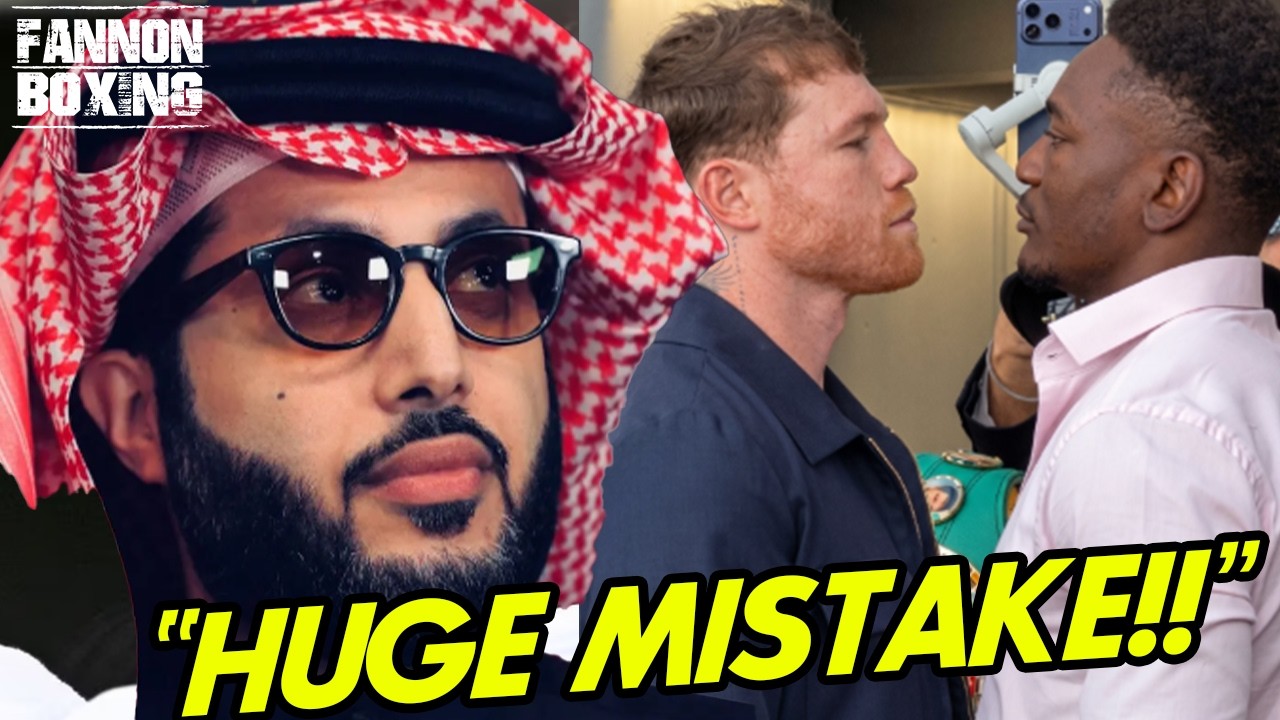
The rarest sound in boxing media opens this video: a host admitting he got it wrong. Fannon says it three times — wrong, wrong, wrong. He was right about a lot of the facts, he says, but he seriously underestimated Canelo Alvarez and he seriously underestimated Turki Alalshikh, because the news is that the Christian Mbilli pay-per-view is actually going ahead in Riyadh this weekend in the middle of what he describes as a war zone, during an assault by another country. Never in a million years, Fannon says, did he think they would go ahead with something he calls this reckless — he expected one of them to come to their senses.
His blame is aimed carefully, and Mbilli is not on the list. Mbilli, in Fannon’s words, is just a worker: a fighter who has probably never had a multi-million-dollar payday, being offered the fight of his lifetime and life-changing money for his family. Asking that man to refuse on safety or political grounds is asking him to burn his family’s future, and Fannon will not do it. The responsibility, he argues, sits with the two men who could have postponed or moved the fight at no real cost to themselves — and chose ego instead. Canelo, he says, will do anything for money, which is probably why fans never got the fights they wanted from him across the years. Turki, he says, is in boxing for his own aggrandisement, not to save the sport.
The picture Fannon paints of the host city is his account, stated as fact by him and reported here as his claim: a government telling its own citizens to stay inside and away from their windows because blasts can blow them out, warning texts sent to phones, and, by his count, at least eight major explosions since those warnings went out — while stadium staff, security, concession workers and fans are asked to gather for a boxing show. He concedes the likely outcome himself: the venue will probably not be hit, and if nothing lands, the organisers will say they knew it was safe all along. His charge is the bet itself — that the gamble is being taken with other people’s lives so that a power player can look unbothered. Other organisations, he notes, have moved events out of Saudi Arabia or postponed them until it was legitimately safe.
And then, because this is boxing, Fannon tells the truth about himself too: he is buying the pay-per-view, and he is pulling for Christian Mbilli — the worker, not the men who priced the risk. On a weekend when the sport’s biggest names are again deciding which fights are worth having, Rnd5Media’s take is that Fannon’s core point survives every argument about probability: a postponement costs a promoter a date. The alternative gamble costs somebody else everything. Fighters stand on business — but the men staging the business should not need a tragedy to learn where the line was.
Video credit: Fannon Boxing.